How ‘Civil War’ Happened in Marvel Comics
On the 20th anniversary of ‘Civil War,’ revisit the pivotal moments from the saga that nearly tore the Marvel Universe apart.
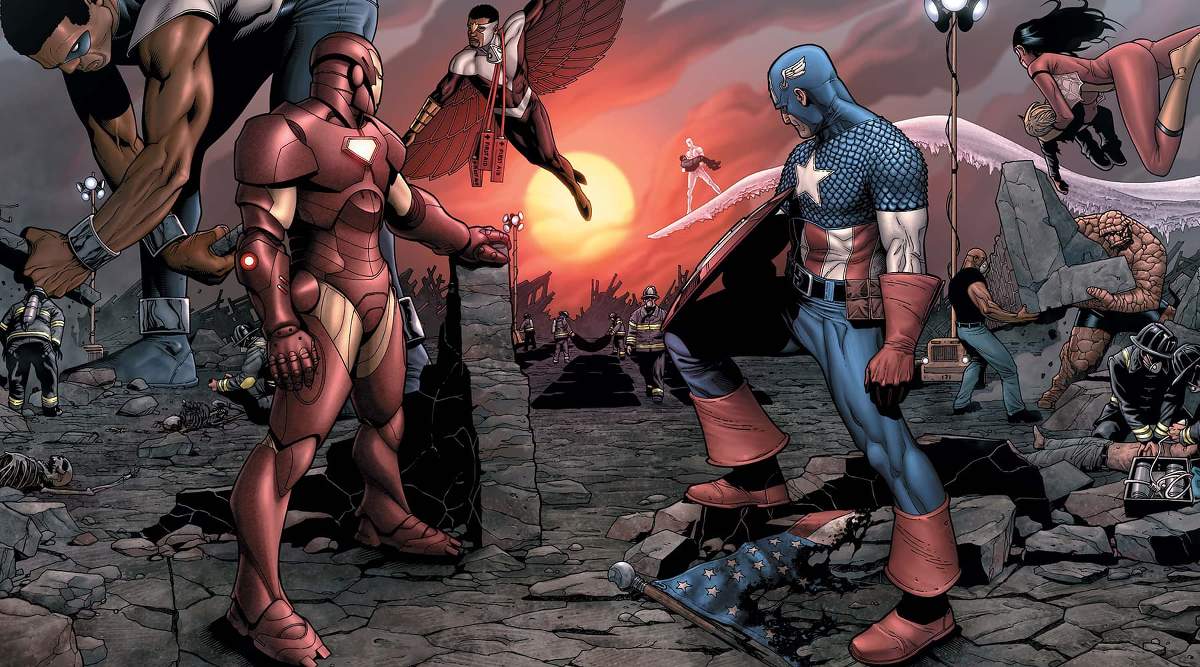
Twenty years ago, the Marvel Universe went to war. In the now-iconic Civil War (2006) saga by Mark Millar and Steve McNiven, Earth’s Mightiest Heroes were forced to register their secret identities with the government or risk becoming outlaws following the Superhuman Registration Act. While Iron Man spearheaded Superhuman Registration in the Super Hero community and helped enforce these new laws, Captain America led the resistance against the new status quo. The conflict touched every corner of the Marvel Universe and turned old friends into bitter enemies.
Now, to mark the event’s 20th anniversary, let’s rewind the tapes. From the deaths of major heroes to dramatic betrayals, here are some of the moments that defined Civil War. The Avengers may have faced dozens of crises since Civil War, but the effects of this saga still reverberate around the Marvel Universe today.
THE STAMFORD INCIDENT
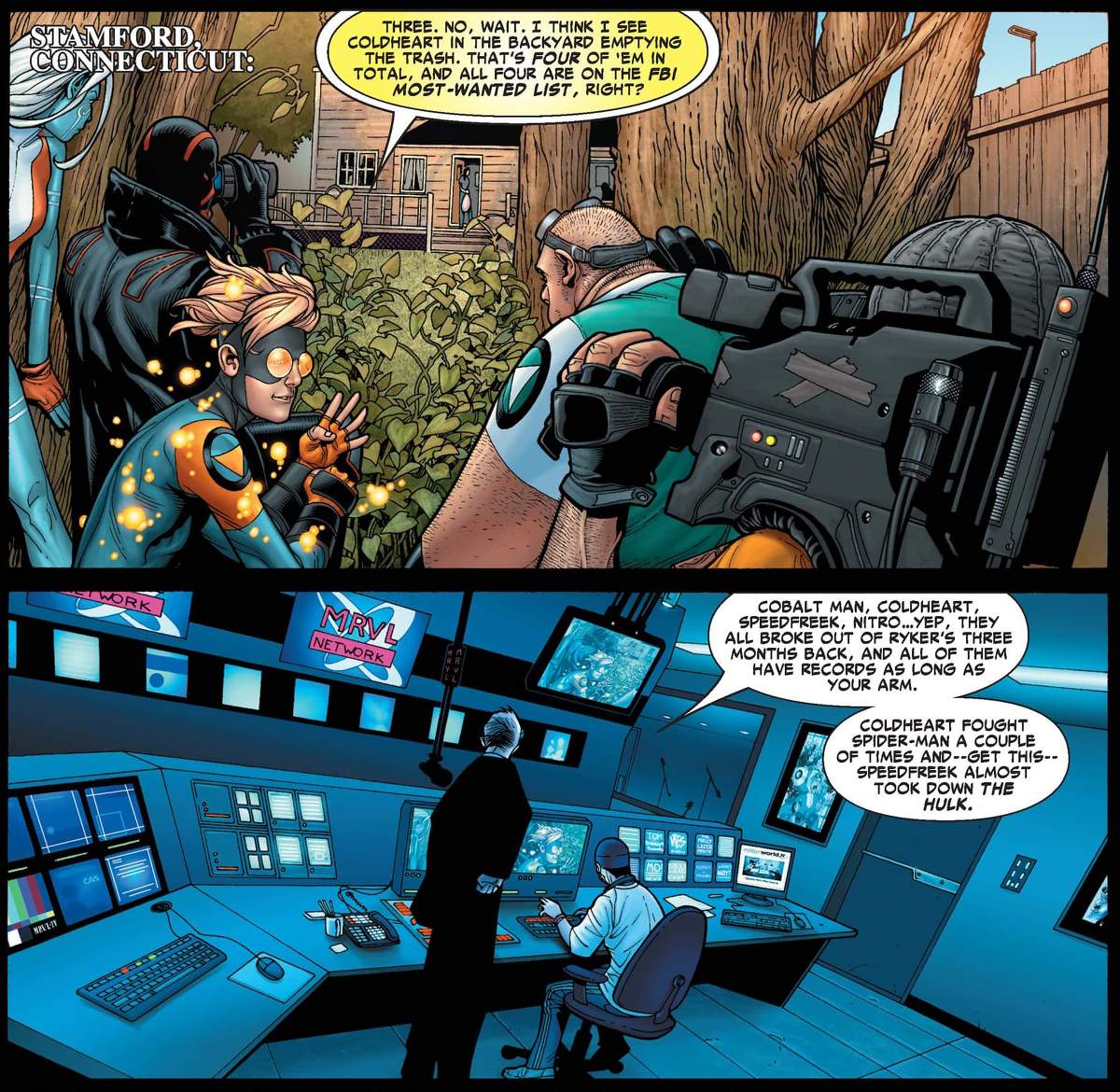
Civil War began when a group of teenage heroes called the New Warriors accidentally destroyed a city in Connecticut while filming an episode of their reality show. Speedball, Night Thrasher, Microbe, and Namorita approached a home in Stamford, Connecticut, where several villains were hiding. As they descended on the villains, Nitro used his explosive powers to unleash a massive blast, destroying most of Stamford in Civil War (2006) #1 by Millar and McNiven.
In what would become known as the Stamford Incident, Nitro’s blast seemingly killed the New Warriors, the villainous Coldheart, Speedfreak, and Cobalt Man, as well as up to 600 civilians. This incident turned much of the public against heroes and expedited the passage of the Superhuman Registration Act. While Speedball and Night Thrasher actually survived the incident, Wolverine and Namor hunted down Nitro to bring him to justice.
THE SUPERHUMAN REGISTRATION ACT PASSES
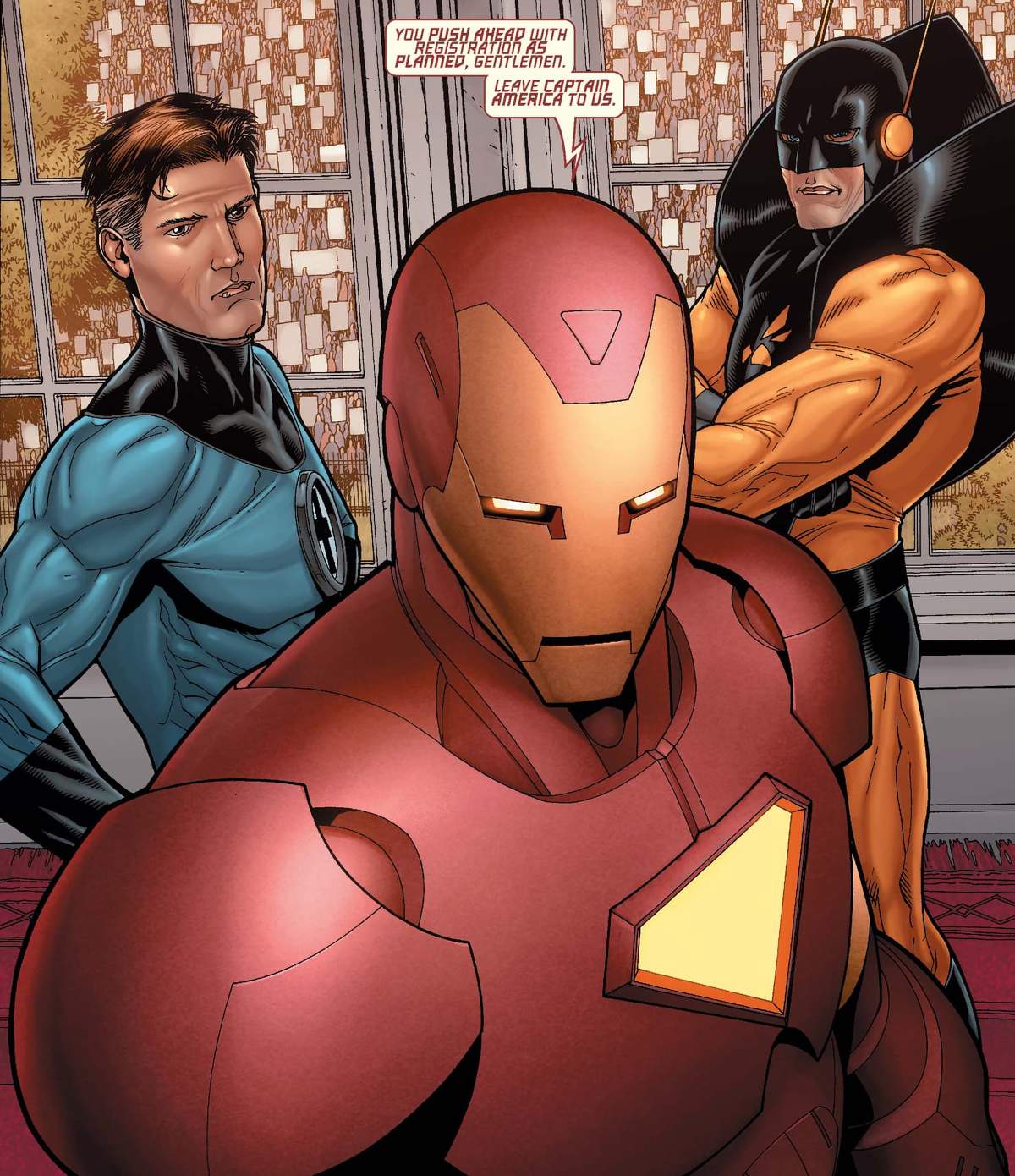
After the Stamford Incident, the United States government responded by passing the Superhuman Registration Act. The law required every superhuman in the country to register their secret identity with the government. Iron Man became one of the act’s first and most ardent defenders. Even before the Stamford Incident, Iron Man lobbied several influential heroes since he believed a registration act was inevitable and thought they'd be able to influence what it would look like by supporting it, as revealed in New Avengers: Illuminati (2006) #1 by Brian Michael Bendis and Alex Maleev.
Although heroes like Doctor Strange and Namor opposed the idea, Mister Fantastic supported Stark’s plan. Once the act became law, several heroes including Black Widow, Ms. Marvel (Carol Danvers), Wonder Man, She-Hulk, and the Sentry, all rallied behind Stark. Several villains also signed on, joining the government-sanctioned Thunderbolts to help enforce Superhuman Registration.
CAPTAIN AMERICA GOES ROGUE
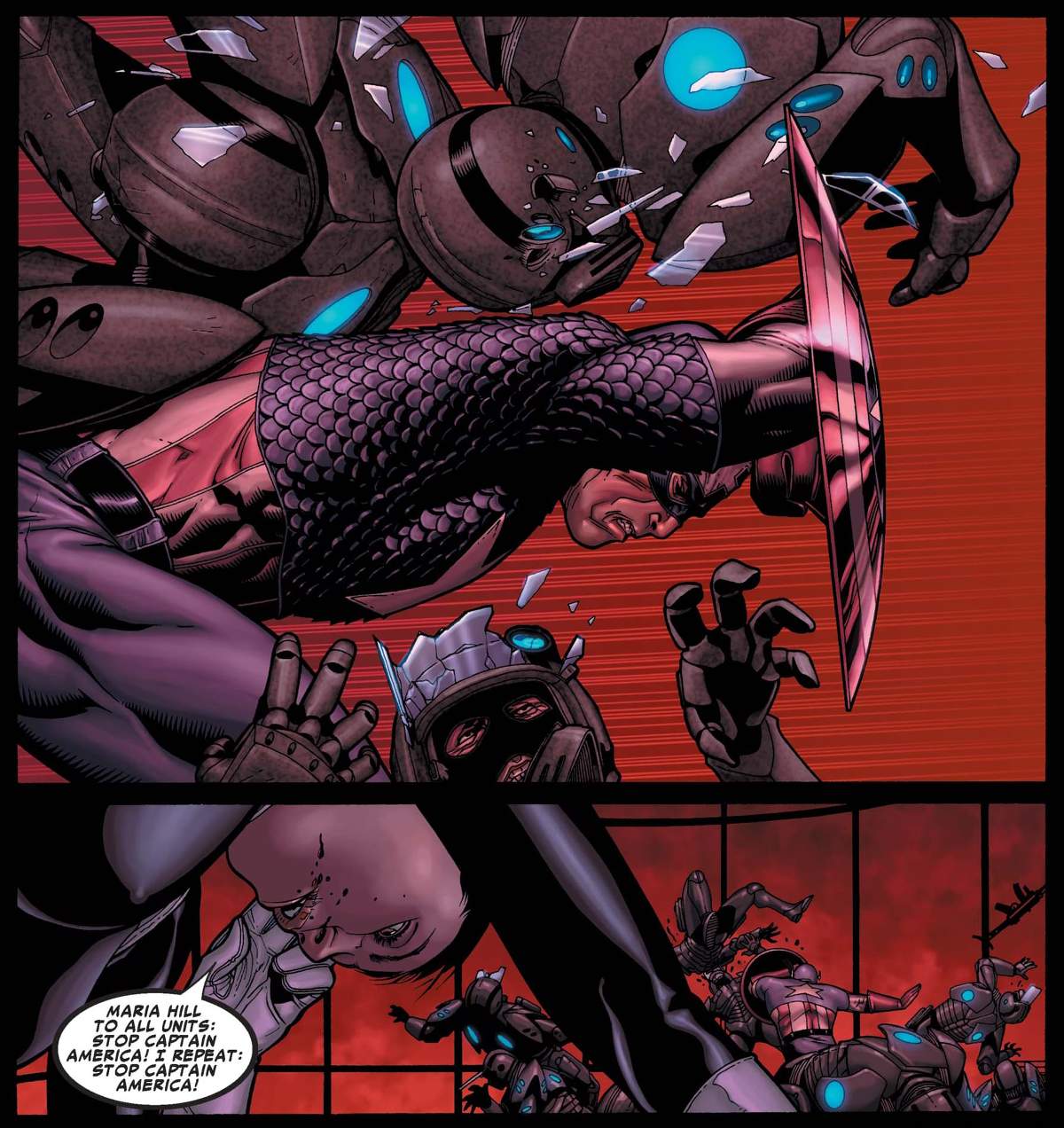
As soon as he learned about the Superhuman Registration Act, Captain America emerged as the law’s most steadfast opponent. S.H.I.E.L.D. Commander Maria Hill tried to get Steve Rogers on board with the bill, but Captain America refused to support a law that restricted heroes’ freedoms or endangered their families. As S.H.I.E.L.D. agents tried to capture him, he escaped the Helicarrier and instantly became an outlaw – as well as the de-facto leader of the Anti-Registration movement.
Numerous heroes supported Captain America and joined him, forming the Secret Avengers in Civil War (2006) #2. This group assembled a wide range of heroes such as Falcon, Cable, Luke Cage, Hercules, and the Young Avengers. As the conflict dragged on, the Secret Avengers hid in bunkers and used new identities to stay ahead of S.H.I.E.L.D. As the government arrested more unregistered heroes, Human Torch, Invisible Woman, and the Punisher also joined the underground resistance.
SPIDER-MAN UNMASKS
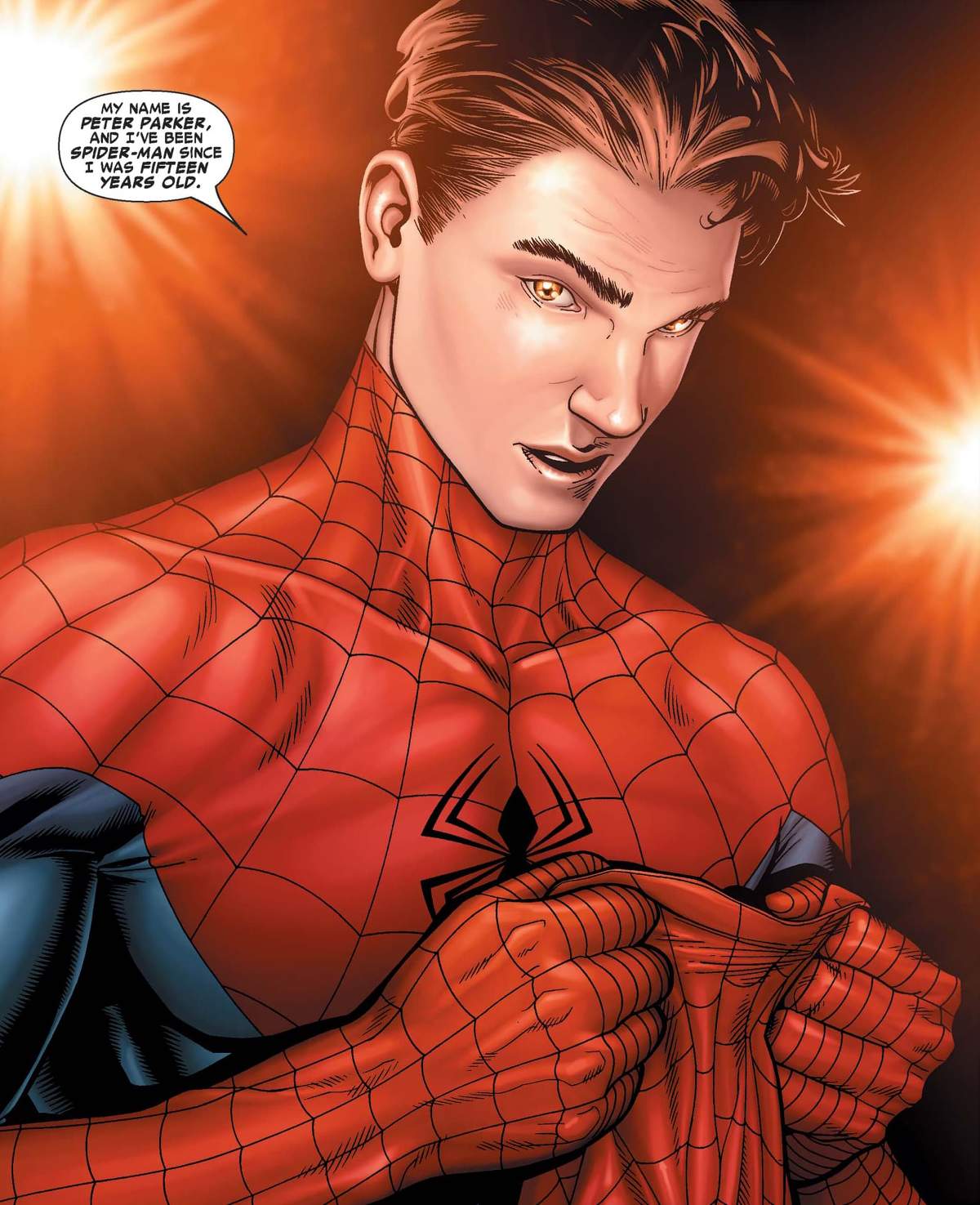
During their time together on the New Avengers, Iron Man and Spider-Man became close allies. Tony had designed Peter's Iron Spider armor, and the wall-crawler also moved into Avengers Tower with Mary Jane and Aunt May. But even before the Superhuman Registration Act became law, Iron Man had urged Spider-Man to support it. Spider-Man had his doubts, but ultimately took Iron Man’s side, unmasking himself during a press conference on live TV to encourage public support for Superhuman Registration in Civil War (2006) #2.
Peter Parker’s closest friends and family, like Mary Jane and Flash Thompson, supported his unmasking, but J. Jonah Jameson and a few others felt betrayed by the web-slinger. Once the conflict ended, Spider-Man’s identity remained public knowledge to dire consequence, forcing Peter to turn to the occult to restore his secret.
PRISON 42
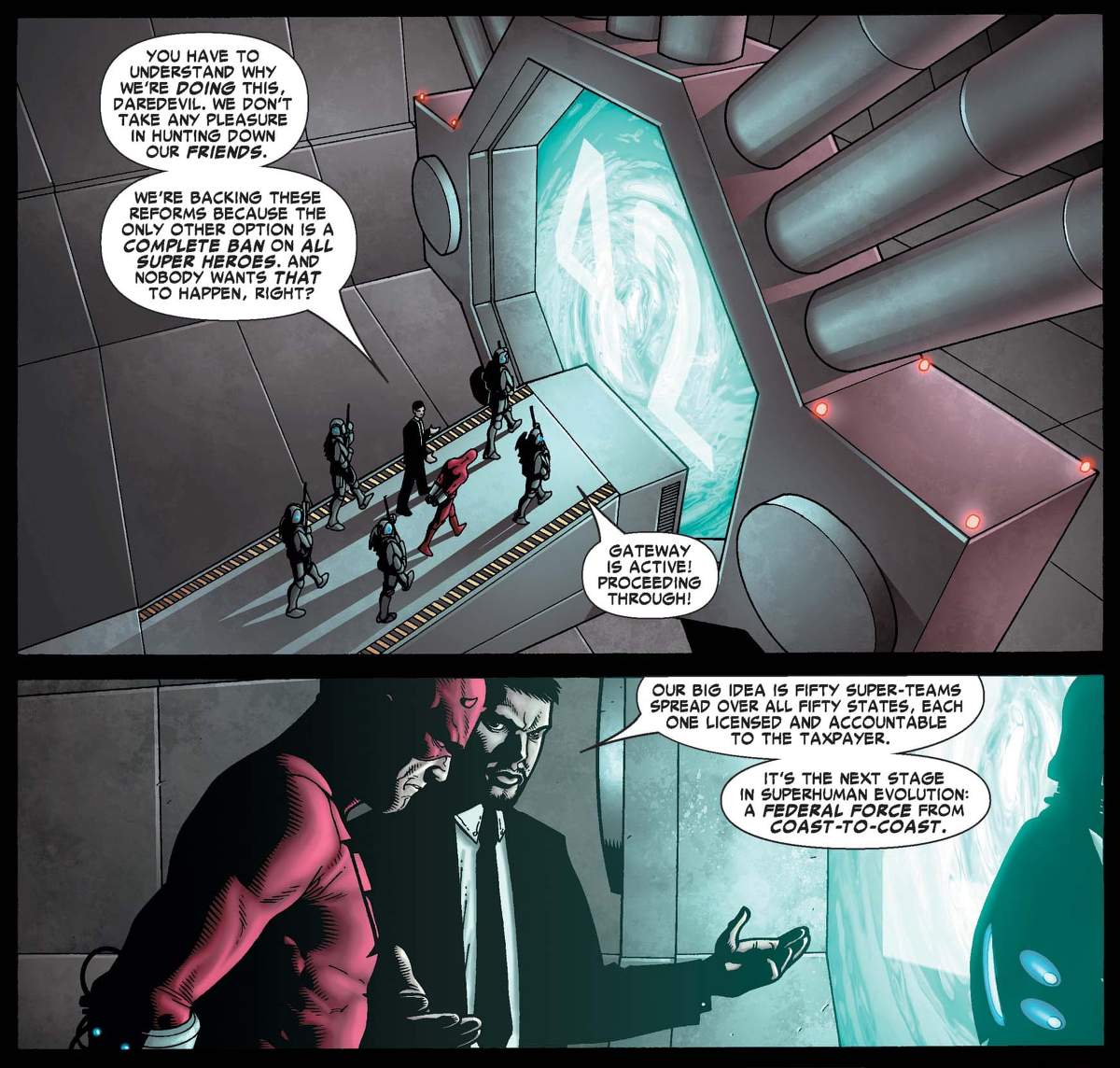
Before Civil War, a paranoid Mister Fantastic built a superhuman prison called the Vault in the Negative Zone. Although it was designed to hold the Fantastic Four’s villains, Reed Richards found a new use for the complex after he emerged as a leading figure supporting Superhuman Registration. When Pro-Registration forces began capturing unregistered heroes, Mister Fantastic and Iron Man transformed the Vault into Prison 42, a massive complex that could hold numerous heroes and villains until their trials.
During the conflict, Prison 42 held heroes like Wiccan, Prowler (Hobie Brown), Cloak, Dagger, Danny Rand posing as Daredevil in Civil War (2006) #5. As Tony Stark tried to talk Iron Fist into joining the Pro-Registration effort, Rand gave him a symbolic silver coin and called him a traitor.
PROJECT LIGHTING AND THE DEATH OF BILL FOSTER
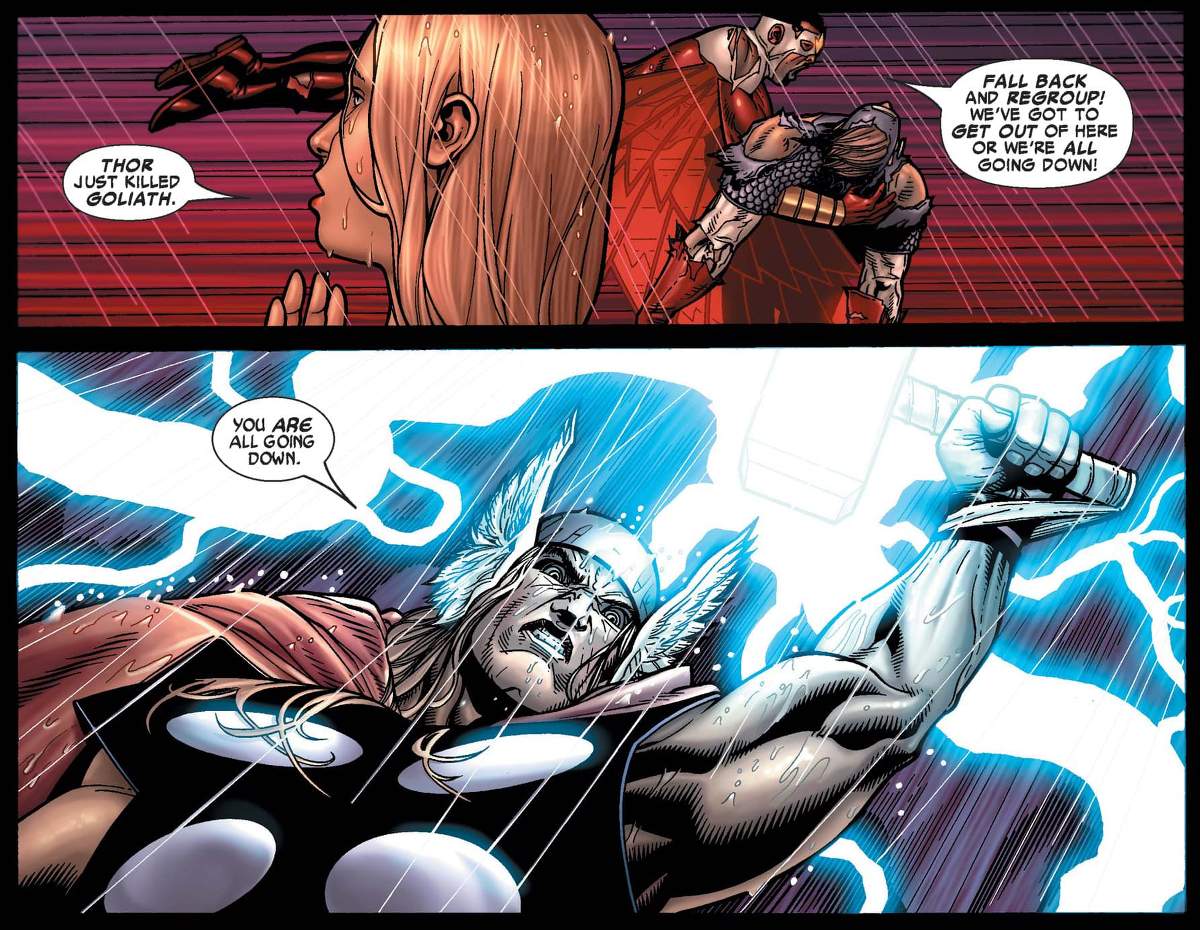
When the Avengers split into opposing sides of the Superhuman Civil War, one of the team’s oldest members, Thor, was notably absent from the conflict. The Asgardian god of Thunder had died during a recent crisis. However, Iron Man and his allies had godlike contingencies through Project Lightning. Using just a strand of Thor’s hair and sophisticated cybernetic technology, Project Lightning created a clone of Thor.
During a fight between Stark and Rogers’ factions, the Thor clone killed Goliath (Bill Foster), a size-changing hero, by shooting a beam of electricity through his chest in Civil War (2006) #4. Foster’s death shocked people on both sides of the conflict, resulting in several heroes defecting from their respective camps. Hercules later used the clone’s fake Mjolnir to destroy the cybernetic Thor in the final showdown of the Superhuman Civil War. The real Thor returned to life shortly after the conflict.
SPIDER-MAN SWITCHES SIDES
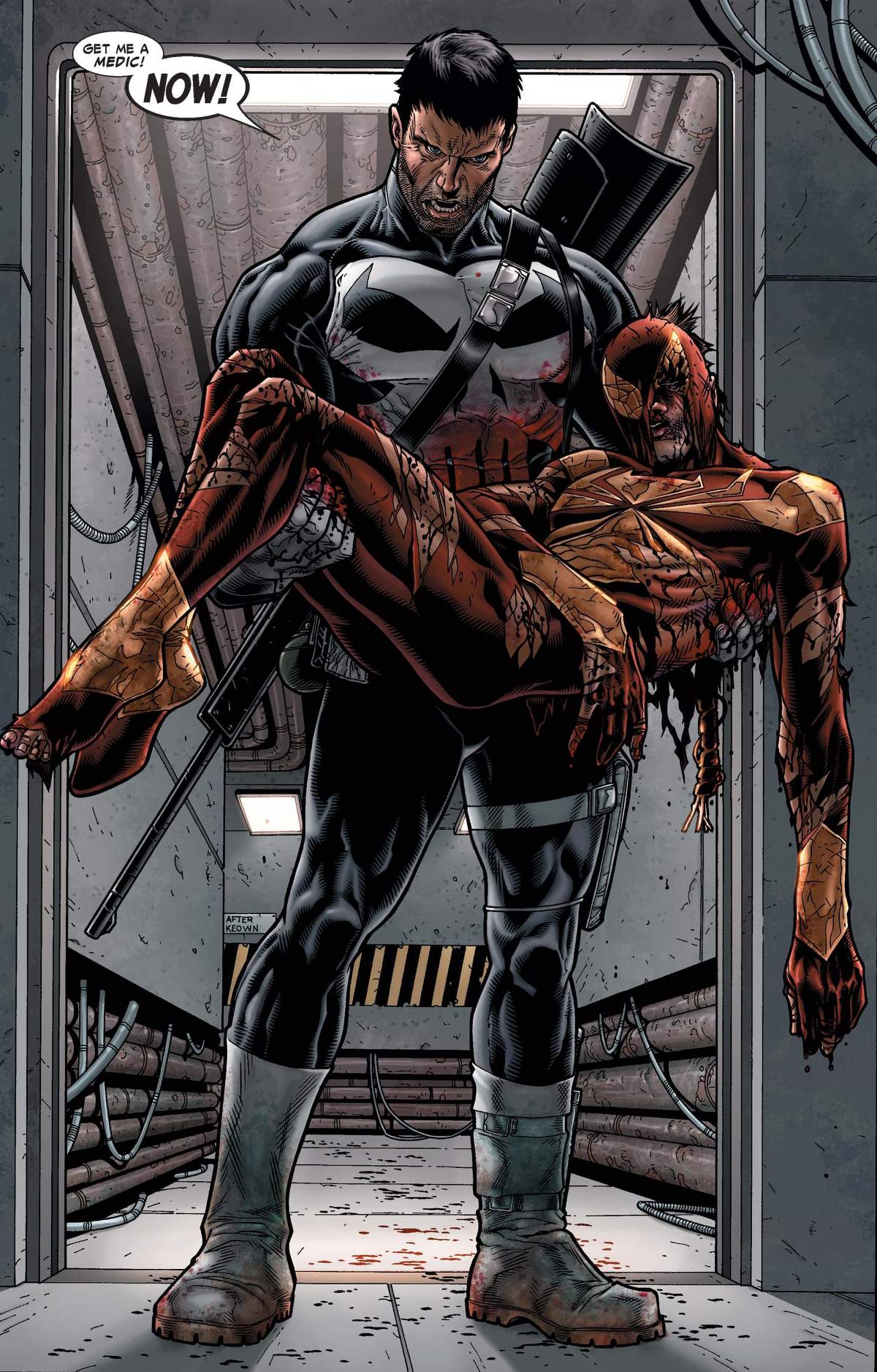
Spider-Man may have entered Civil War as one of Iron Man’s supporters, but he defected to Captain America’s Secret Avengers in Civil War (2006) #5. When Peter learned that Iron Man had been tracking his suit and imprisoning heroes to the Negative Zone, he confronted his mentor, who sent 14 registered villains after him. They nearly killed him, but the Punisher found Spider-Man and rushed him to Captain America’s base.
While the Secret Avengers kicked the Punisher out for killing two sympathetic villains, Spider-Man joined the team. He announced his change of heart by revealing the existence of Prison 42 in a news conference and joined the final battle against Iron Man’s team. Following the conflict, Spider-Man remained an outlaw vigilante with the New Avengers – and one of Kingpin’s snipers shot Aunt May in the fallout of his public unmasking.
THE YOUNG AVENGERS MEET THE RUNAWAYS
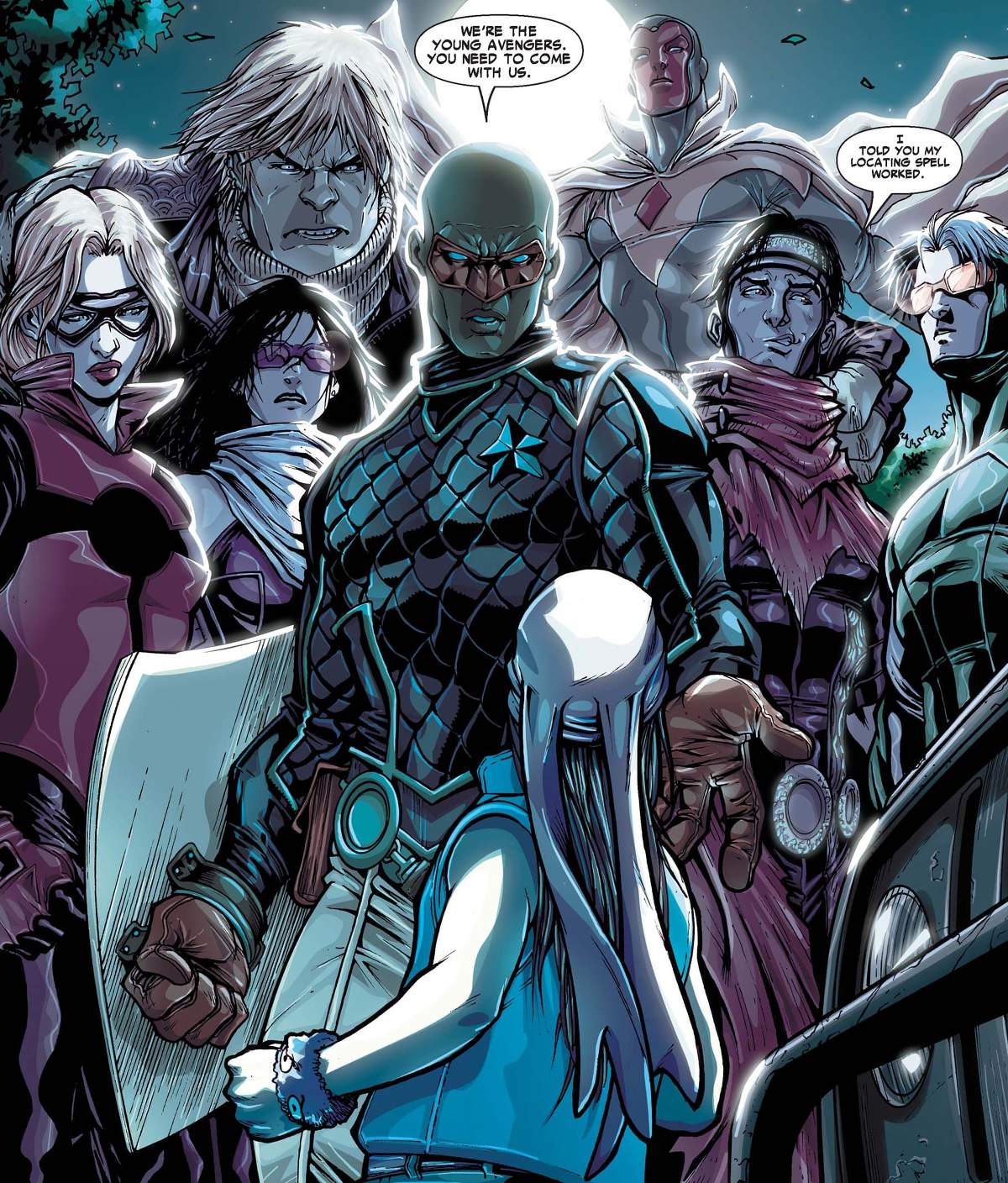
While the New Warriors accidentally kicked off the Superhuman Civil War, the conflict also brought together two other groups of teenage heroes: the Young Avengers and the Runaways. After witnessing a battle between the Runaways and S.H.I.EL.D. on TV, the Young Avengers traveled to Los Angeles to investigate the group’s connection to their teammate, Vision, in Civil War: Young Avengers/Runaways (2006) #1 by Zeb Wells and Stefano Caselli.
Following a brief fight between the teams, a mind-controlled Marvel Boy (Noh-Varr) captured unregistered members of both groups. The teen heroes rescued their teammates and freed Marvel Boy from his conditioning, with the Young Avengers returning to the Secret Avengers and the Runaways going underground.
CAPTAIN AMERICA SURRENDERS
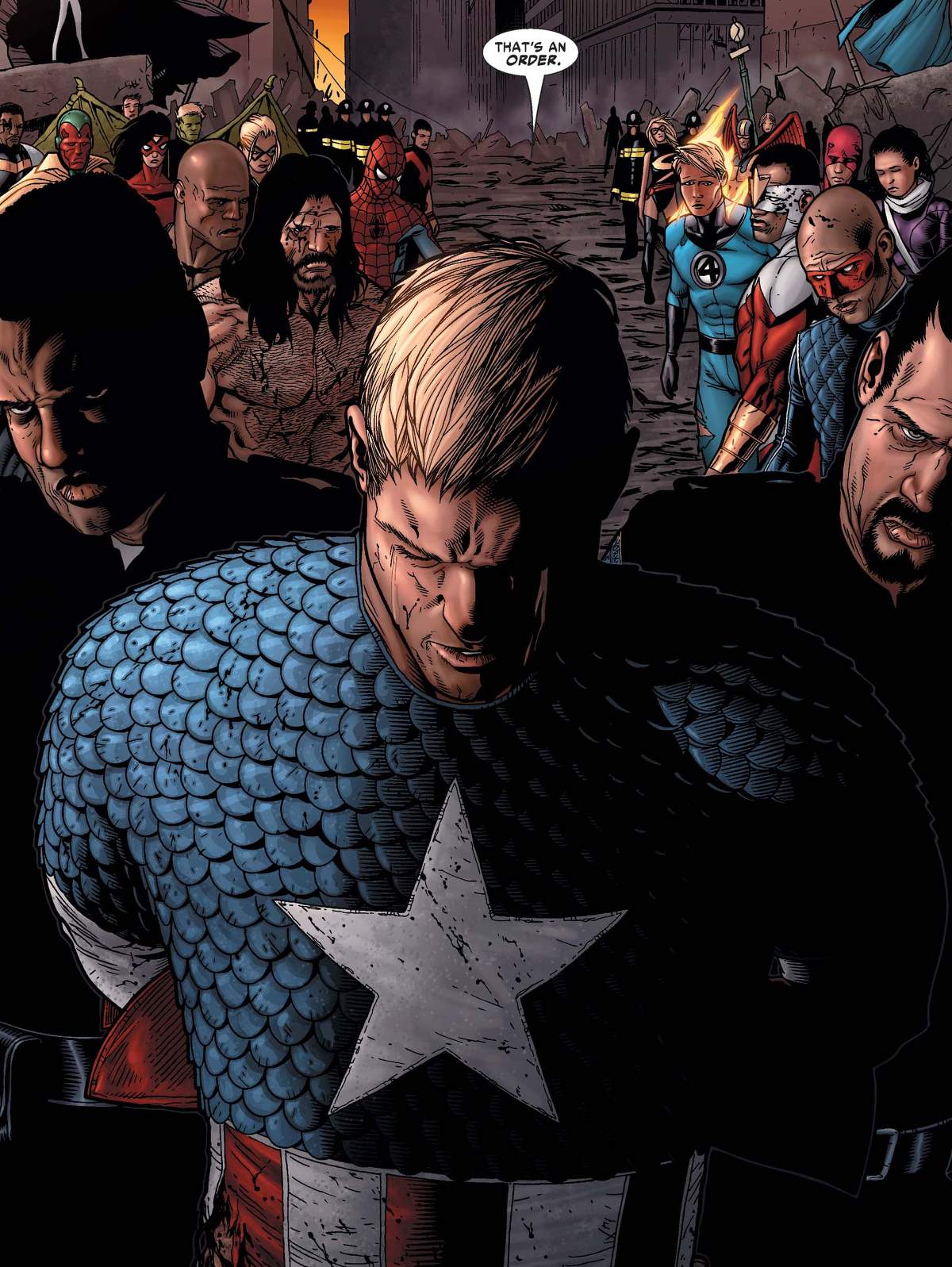
The final battle between Captain America and Iron Man’s teams started in the Negative Zone and spilled out onto the streets of New York in Civil War (2006) #7. While Captain America and his Secret Avengers maintained the upper hand, several civilians stopped him from landing a final blow on Iron Man. Captain America stood down and ordered his allies to stop fighting when he realized how much destruction they left in their wake. After unmasking, Steve Rogers surrendered to the police and allowed himself to be taken into custody.
In the aftermath of Civil War, some of Captain America’s unregistered allies continued to operate as the New Avengers, but many more heroes and villains joined the Initiative – a U.S. government policy that put a registered super-team in every state.
THE DEATH OF CAPTAIN AMERICA
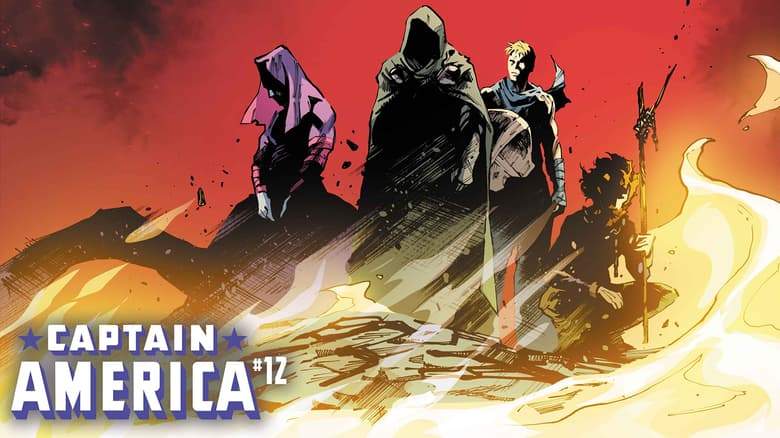
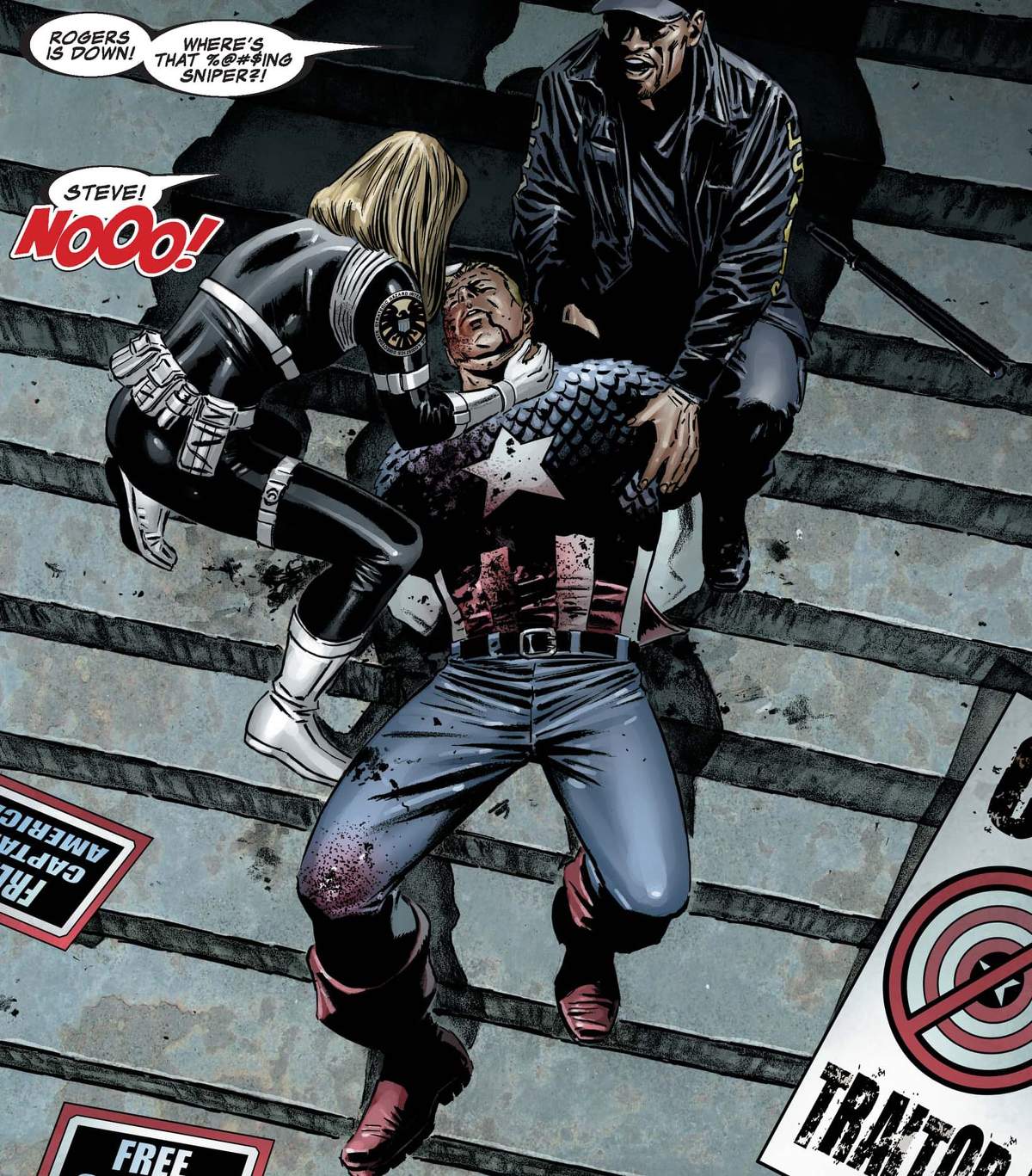
Captain America became the final casualty of Civil War when he was fatally shot in Captain America (2004) #25 by Ed Brubaker and Steve Epting. As he walked into a courthouse for his trial, the Red Skull hired Crossbones to shoot the flagged Avenger. Under the influence of the mind-twisting Doctor Faustus, Sharon Carter, Rogers’ longtime partner, also shot him in the stomach three times to seal the deal.
When Captain America died, his close allies pursued the Red Skull. Iron Man received a note asking him to look after the recently deprogrammed Bucky Barnes, so Tony Stark passed Captain America’s shield and mantle on to the former Winter Soldier. Rogers was eventually revived, his consciousness rescued from the timestream, but the assassination of Captain America ended the Civil War era on a dark note.
Want to read more Civil War stories? Join Marvel Unlimited for instant access to 30,000+ comics on the Marvel Unlimited app or on the web, with digital issues spanning Marvel Comics classics to ongoing series!
The Daily Bugle
Can’t-miss news and updates from across the Marvel Universe!


Related